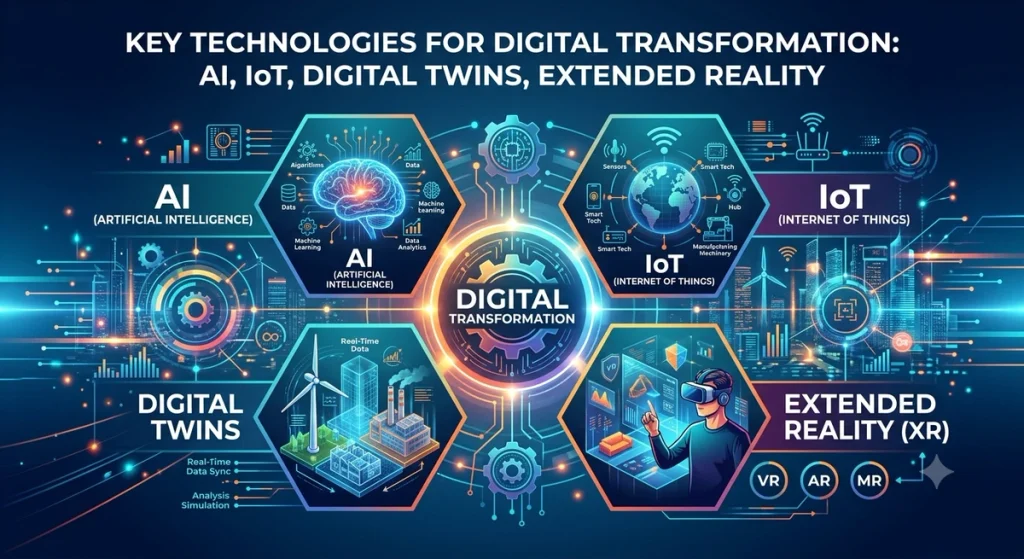

Digital transformation is increasingly recognised as a key enabler in the preservation and revitalisation of industrial heritage. By leveraging advanced technologies such as digital twins, 3D scanning, virtual and augmented reality, and data analytics, heritage assets can be documented, conserved, and interpreted in innovative ways. This article examines how digital tools help safeguard industrial and mining heritage while enhancing its accessibility for education and tourism. It also highlights the role of digital heritage initiatives in supporting regional development, fostering community engagement, and promoting sustainable use of cultural resources. The integration of digital technologies not only mitigates the physical degradation of heritage sites but also opens new pathways for immersive learning experiences and diversified tourism offerings. In this context, digital transformation acts as a bridge between the preservation of the past and the demands of a knowledge-driven, digitally enabled future.
Industrial heritage sites represent a valuable record of technological, economic, and social development. However, many such assets face challenges related to degradation, underfunding, and limited accessibility. Digital transformation offers a set of tools and methodologies that can address these issues while creating new opportunities for education, tourism, and regional innovation.
One of the primary benefits of digital transformation in industrial heritage preservation is the capacity to create precise digital records. Technologies such as 3D laser scanning, photogrammetry, and digital twins enable accurate documentation of structures and landscapes. These digital representations serve both conservation and research purposes, enabling experts to monitor structural conditions, simulate interventions, and archive detailed information for future generations.
In the educational domain, digital tools enable the development of immersive and interactive learning environments. Virtual reality (VR) and augmented reality (AR) applications allow students, researchers, and visitors to explore industrial sites remotely or to experience historical processes in situ. This enhances understanding of complex industrial systems and supports interdisciplinary learning across engineering, history, and environmental studies.
Tourism also benefits significantly from digital transformation. By integrating digital storytelling, mobile applications, and virtual tours, heritage sites can reach wider audiences and provide enriched visitor experiences. Digital platforms facilitate access to sites that may be physically inaccessible due to safety or conservation concerns. Furthermore, they enable personalised, multilingual content, improving inclusivity and engagement.
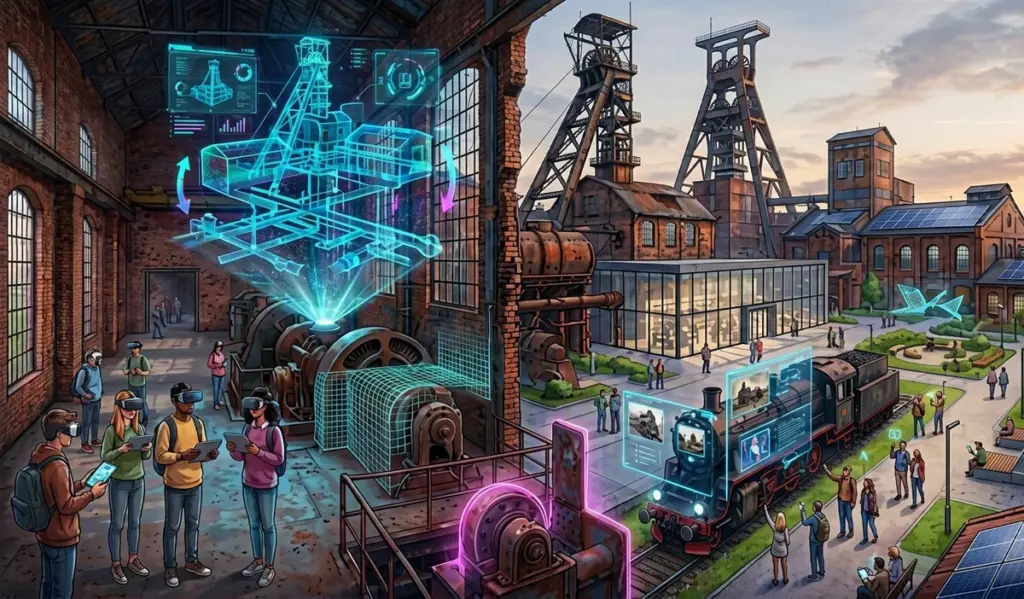
From a regional development perspective, digital heritage initiatives can stimulate economic growth by attracting visitors, encouraging investment, and supporting local businesses. The integration of industrial heritage into smart tourism strategies contributes to diversifying regional economies, particularly in post-industrial areas. Additionally, digital transformation fosters collaboration between stakeholders, including cultural institutions, technology providers, academia, and local communities. Importantly, digital solutions also support sustainability. By reducing the need for physical interventions and enabling remote access, they help minimise environmental impact. Smart monitoring systems can track environmental conditions, structural stability, and visitor flows, ensuring that heritage sites are managed responsibly and preserved over the long term.
Digital transformation plays a critical role in the preservation and revitalisation of industrial heritage. Key benefits include:
- Enhanced documentation and conservation through advanced digital technologies
- Improved accessibility and engagement via immersive educational tools
- New opportunities for sustainable tourism development
- Strengthened regional economies through innovation and collaboration
- Support for environmentally responsible heritage management
By integrating digital approaches, industrial heritage can be preserved not only as a record of the past but also as a dynamic resource for future development.