
A heritage digital twin is a dynamic, data-rich representation of a physical site, building, structure or landscape. Unlike a static three-dimensional model, it can integrate geometric documentation with historical records, information on materials, conservation assessments and data collected through monitoring systems. Digital twins can therefore support preventive conservation, risk assessment, maintenance planning and interdisciplinary decision-making. They may be particularly valuable for complex cultural, industrial and mining heritage sites, where changes in structural condition, environmental exposure and patterns of use need to be observed over time. Their successful implementation nevertheless depends on clearly defined objectives, reliable data, interoperability and long-term information governance.
Digital documentation has become an important component of heritage conservation. Technologies such as laser scanning, photogrammetry and Building Information Modelling can produce detailed representations of historic assets. A digital twin develops this concept further by connecting the digital representation with changing information about the physical site.
A heritage digital twin should not be understood simply as a visually accurate virtual replica. It is a structured information environment that can combine three-dimensional geometry, archival sources, material characteristics, inspection records, sensor measurements and conservation interventions. When information is updated over time, the twin becomes a record of both the current condition and the development of the heritage asset.
Data may be obtained from environmental and structural sensors, surveys, inspections and existing documentation. The resulting system can help specialists identify changes, assess risks, compare intervention scenarios and plan maintenance. Integrating digital twins with artificial intelligence or analytical models may also support anomaly detection and predictive conservation, although automated results must remain subject to expert interpretation.
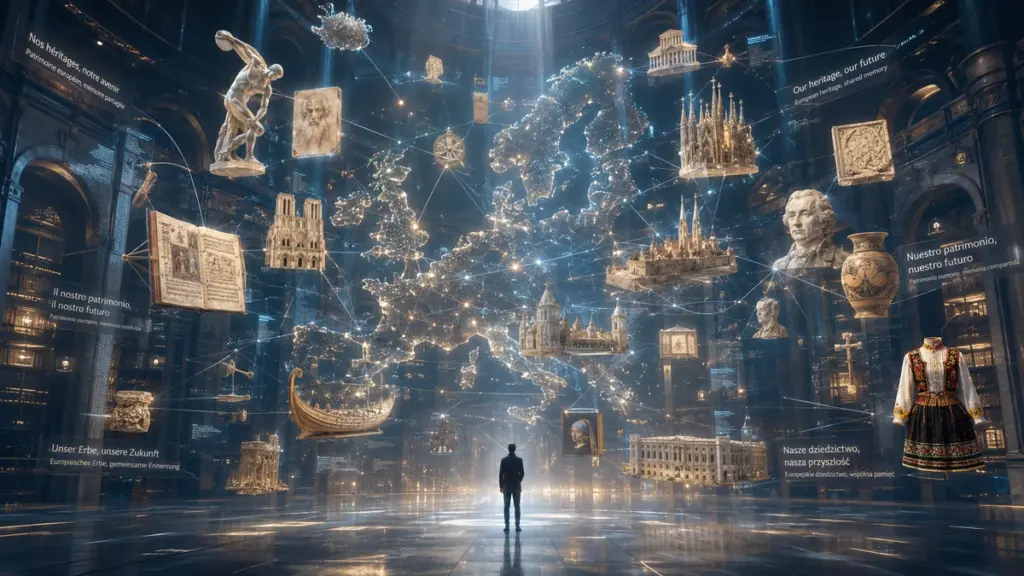
For industrial and mining heritage, digital twins can bring together information about buildings, machinery, underground infrastructure, landscapes and environmental conditions. They may also support training, research and public interpretation through extended-reality interfaces. The same digital resource can therefore serve several purposes, but access should be adapted to the needs of different users. Implementation should begin with a clear conservation or management objective. Data quality, technical standards, cybersecurity, intellectual property, accessibility and long-term maintenance must be considered from the outset. European initiatives promoting 3D digitisation and shared heritage data demonstrate the wider importance of reusable and interoperable digital resources.