
Walk into a growing number of museums and you may now be able to “talk” to a historical figure, a chatbot trained to play a Renaissance patron or a Roman senator. It is engaging. It is also, depending on how it is built, a small act of invention dressed as memory. This is the central tension of generative AI (GenAI) in heritage: the same tools that can enrich a visit can also fabricate plausible pasts.
The opportunities are real and documented. Working with the century-old textiles of the Wieng Yong House Museum, Sangamuang and colleagues (2025) built a GenAI-powered virtual assistant in a metaverse environment, letting visitors interrogate heritage in real time, while explicitly cautioning that such assistants can “generate misinformation related to cultural knowledge” when pushed beyond their training data, risking the marginalisation of community voices and the erosion of authenticity. In parallel, Reusens, Adams and Baesens (2025) show that large language models can meaningfully widen access to museum and archival collections through automated keyword generation, yet they too document limits in cultural sensitivity and technical nuance, recommending alignment with FAIR (Findable, Accessible, Interoperable, Reusable) data principles.
The risk register is equally well mapped. Nieto McAvoy and Kidd (2024) coin the phrase “synthetic heritage” in their critical reading of commercial services that animate photographs of the deceased (technologies “aggrandised as mechanisms for ‘bringing people back to life'”) warning that algorithmic logics tend to homogenise memory and serve corporate interests. Spennemann (2026) reframes the same anxiety from the collection’s side: in an age of deepfakes and misinformation, physical objects gain renewed value as “anchors of truth and authenticity,” and institutions should respond with robust documentation standards such as blockchain-secured metadata and transparent curatorial histories.
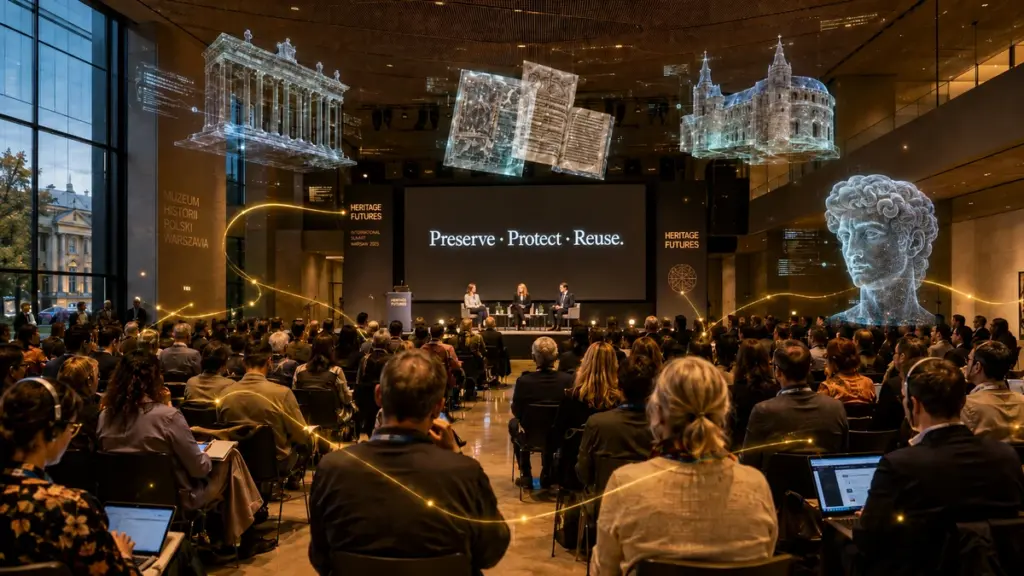
There are guardrails to lean on. The UNESCO Recommendation on the Ethics of Artificial Intelligence (2021), notably the only global AI-ethics instrument to address cultural impacts explicitly, and the EU AI Act provide principles and obligations. The field is adding its own conventions, from clear labelling of AI-generated content to human curatorial oversight and community co-creation. The conversation is serious enough that a dedicated international conference on Generative AI and Cultural Heritage is being convened in 2026.
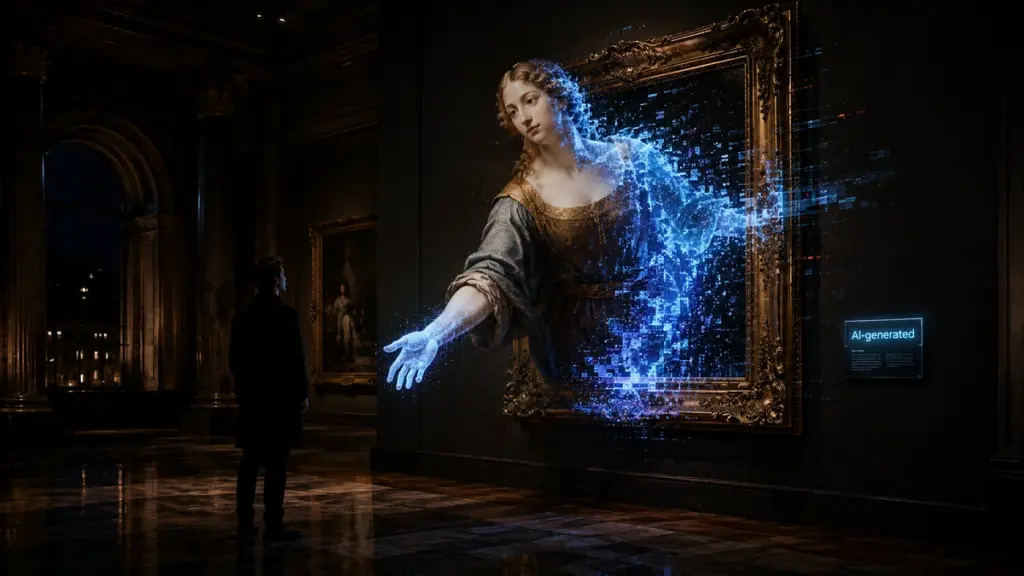
For HI-EURECA-PRO, the stance need not be defensive. GenAI is a remarkable amplifier, but heritage trades on trust. The institutions that win the next decade will be the boldest with the technology and the strictest with the truth.
References
- Nieto McAvoy, E., & Kidd, J. (2024). Synthetic Heritage: Online platforms, deceptive genealogy and the ethics of algorithmically generated memory. Memory, Mind & Media, 3, e12. https://doi.org/10.1017/mem.2024.10
- Reusens, M., Adams, A., & Baesens, B. (2025). Large language models to make museum archive collections more accessible. AI & Society, 40(6), 4485–4497. https://doi.org/10.1007/s00146-025-02227-8
- Sangamuang, S., Ariya, P., Intawong, K., et al. (2025). Integrating generative AI and the metaverse for cultural heritage: a case study on the preservation of Lamphun Brocade Fabric. Humanities and Social Sciences Communications, 12, 1974. https://doi.org/10.1057/s41599-025-06237-1
- Spennemann, D. H. R. (2026). Now more than ever: the role of museum and archival objects in an age of generative artificial intelligence. Collection and Curation, 45(1), 14–20. https://doi.org/10.1108/CC-04-2025-0020