
When Mount Vesuvius buried Herculaneum in 79 AD, it carbonised an entire private library into what looked, for nearly three centuries, like lumps of charcoal. Unrollable, unreadable, untouchable — the papyri of the Villa of the Papyri were the ultimate locked archive. In 2025 that lock began, finally, to turn.
Using a synchrotron at the UK’s Diamond Light Source to X-ray a still-sealed scroll known as PHerc. 172, and then applying machine-learning models trained to spot the faint signature of ancient carbon ink, researchers produced the first images of text from inside the scroll, legible columns that Oxford scholars have begun to decipher (University of Oxford / Bodleian Libraries announcement). It built on an earlier milestone, when a small international team won the Vesuvius Challenge grand prize for recovering passages of Epicurean philosophy from another scroll (University of Kentucky; background in The Conversation and National Geographic).
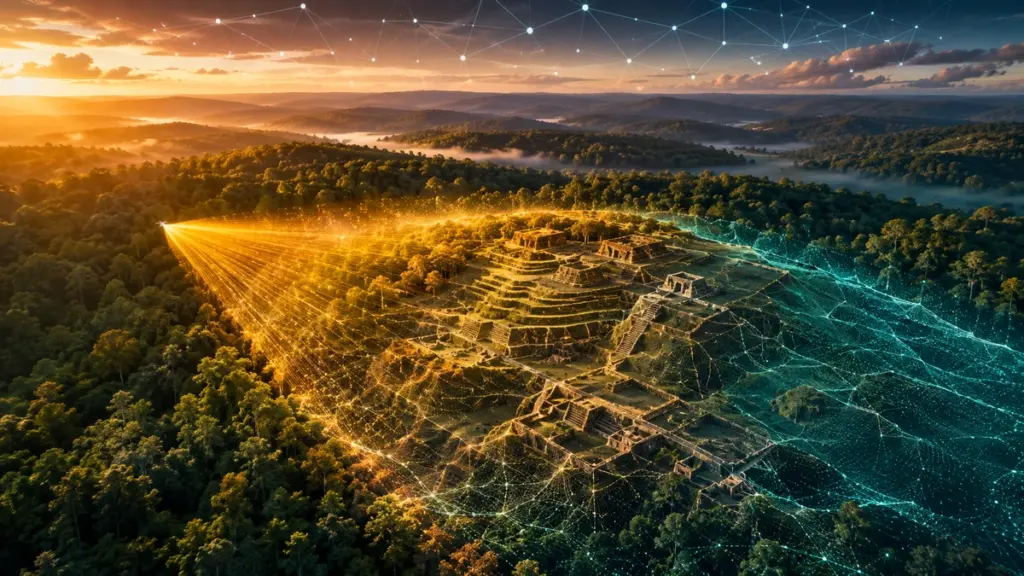
What makes this more than a curiosity is the method. “Virtual unwrapping” turns a fragile object into data, then lets algorithms do the reading. The implications reach far beyond Naples: any heritage object too delicate to handle: a brittle charter, a fire-damaged industrial ledger, a folded miner’s map, becomes a candidate for non-destructive digital recovery. Preservation and access converge into a single act.
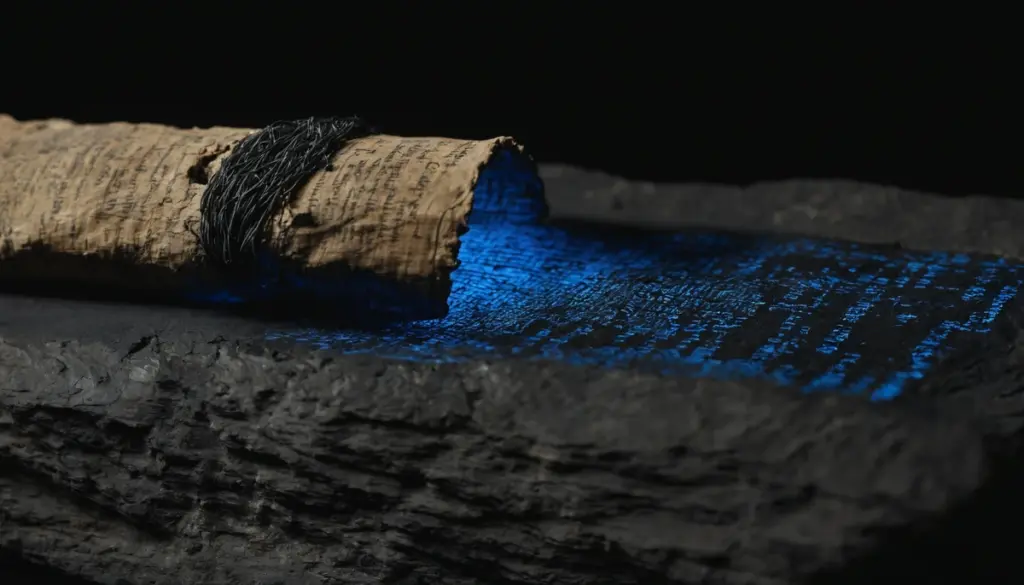
The scale of what may follow is staggering. Only a fraction of a single scroll has been read so far, yet hundreds of charred scrolls survive, most still rolled shut in Naples, and the open, prize-driven design of the Vesuvius Challenge has reframed a 2,000-year-old puzzle as a problem that anyone with a laptop can help solve, working from publicly released 3D scans and shared code. Because the Villa of the Papyri held an Epicurean library, scholars anticipate that the texts emerging over the coming years will range across ethics, music and the history of philosophy and may include works unread since antiquity (The Conversation). Tantalisingly, archaeologists suspect that further scrolls still lie buried at Herculaneum itself, awaiting future excavation (National Geographic). If the technique scales as its pioneers hope, we may be living through the largest expansion of the classical canon in modern history, achieved not by digging, but by decoding. It is a striking demonstration that a “lost” archive is sometimes only an unsolved computational problem, and that the right combination of imaging physics, machine learning and global collaboration can return voices to us across two millennia of silence.
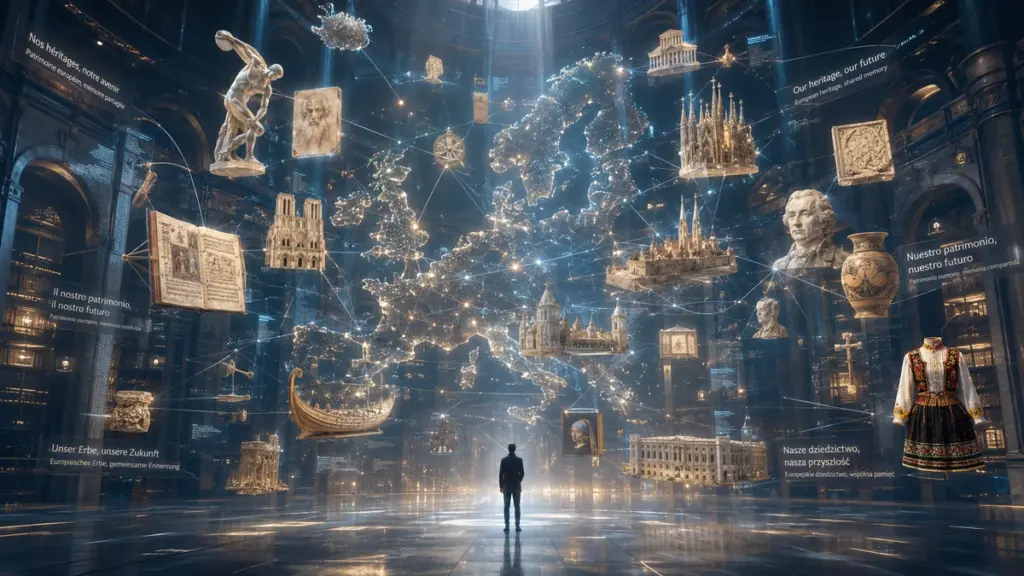
For the HI-EURECA-PRO community, the lesson is methodological as much as inspirational: open challenges, shared datasets, and cross-border collaboration can crack problems that defeated specialists for generations.